

Burn It Right: How to Get the Most Out of Your Candle

There’s a difference between lighting a candle and burning a candle. Most people do the first one. A few small habits turn it into the second — and once you know them, you’ll never go back.
No fluff, no candle-influencer nonsense. Just the stuff that actually works.
The First Burn Is the Most Important One
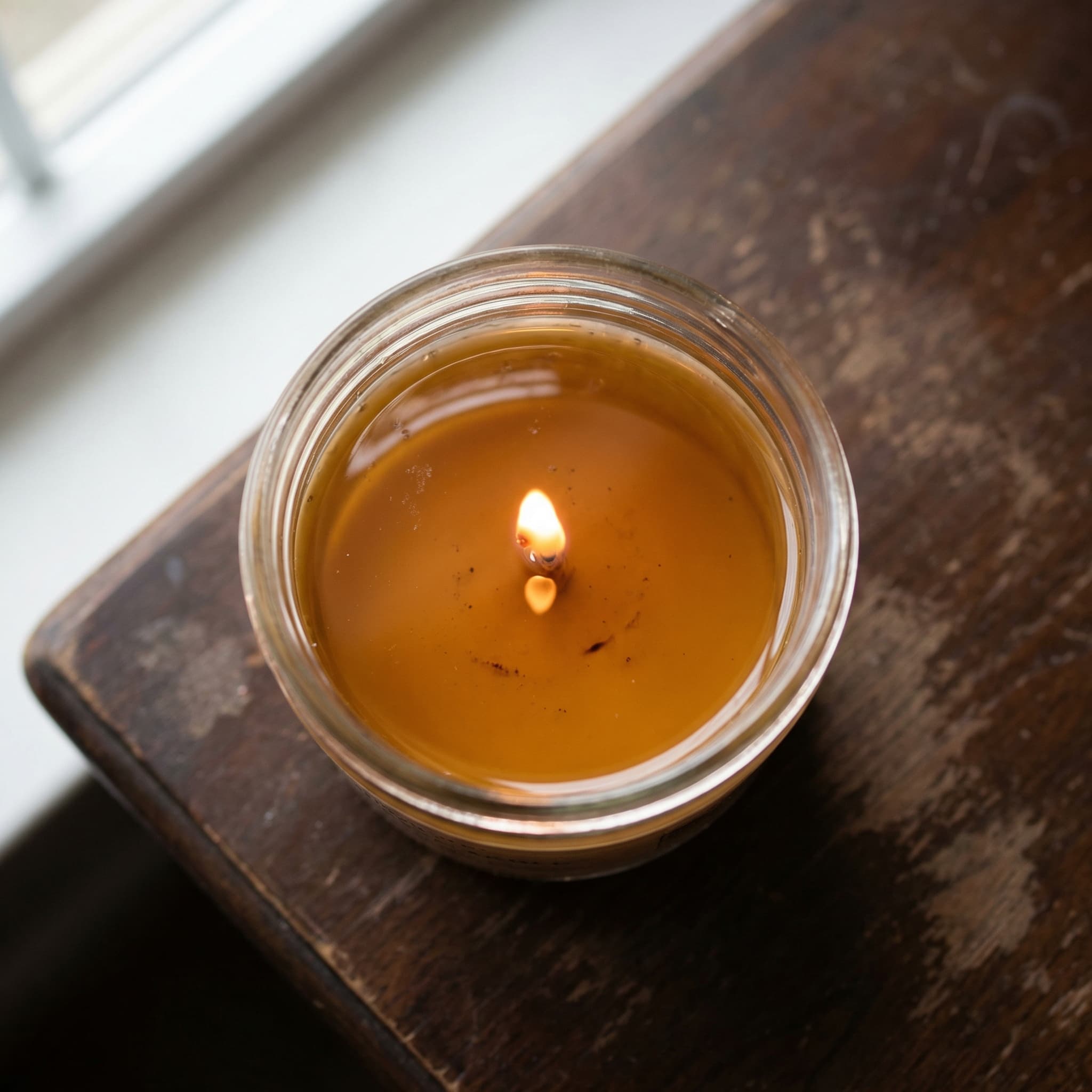
Wax has memory. The first time you light a candle, you’re setting the pattern for every burn after it. If you blow it out before the melt pool reaches the edges, the wax will “remember” that smaller circle and tunnel down the centre every time.
The fix is simple: on your first burn, let the candle go until the entire top surface is liquid from edge to edge. For most candles, that’s about one hour per inch of diameter. A standard jar candle? Give it two to three hours. Walk the dog, make dinner, put something on Netflix. Just let it do its thing.
Trim Your Wick. Every. Single. Time.
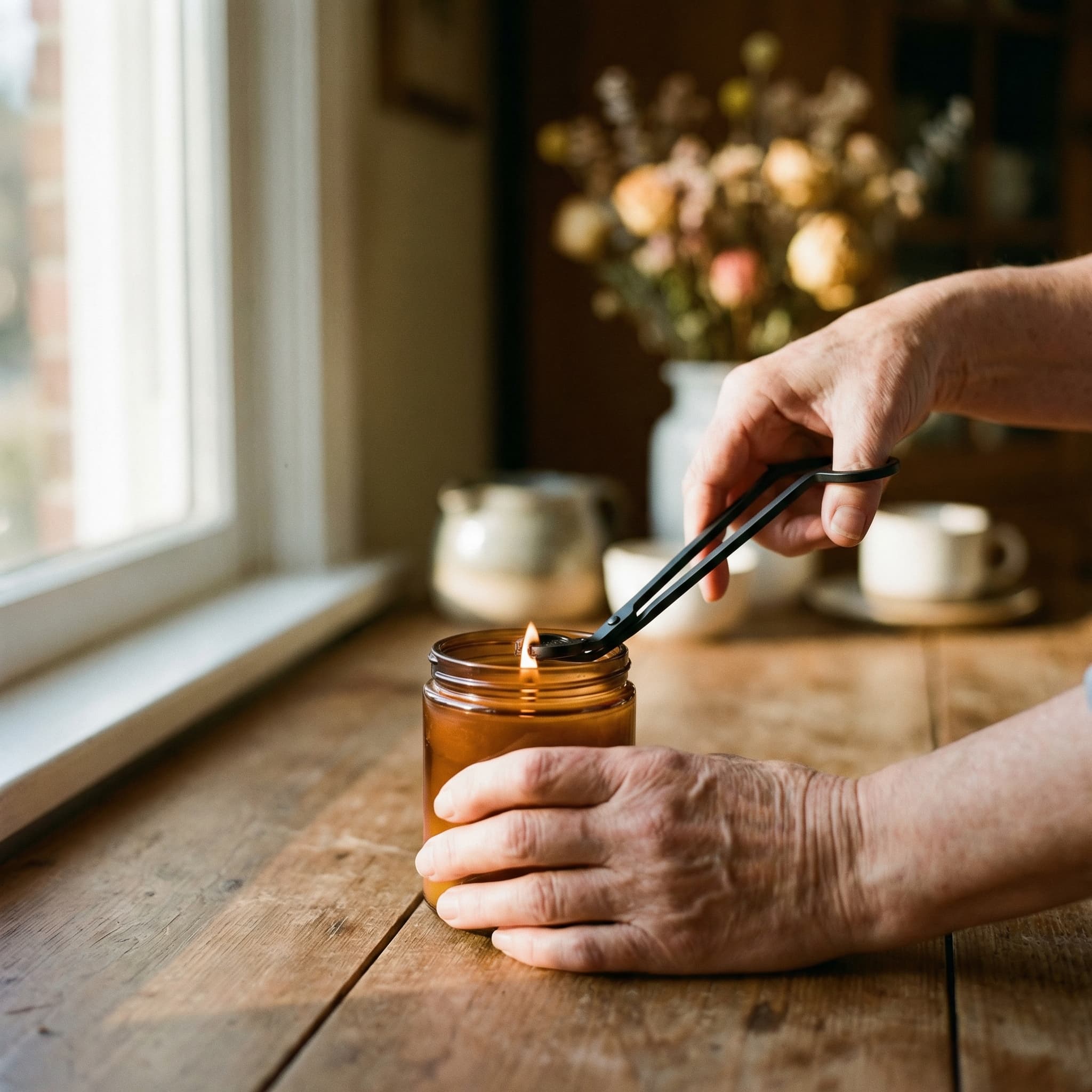
This is the one thing that makes the biggest difference and almost nobody does it. Before every burn, trim the wick down to about ¼ inch. You can use a wick trimmer, nail clippers, or even just pinch off the burnt tip with your fingers once it’s cooled.
A long wick means a bigger flame, which means the candle burns hotter and faster than it should. You get more soot, the jar gets black around the rim, and the fragrance burns off too quickly instead of releasing slowly into the room. A trimmed wick gives you a steady, clean flame that lets the wax and fragrance do their job properly.
A good candle doesn’t need a bonfire-sized flame to fill a room. It needs a clean, steady burn and a little patience.
Room Size and Placement Matter More Than You Think
A single candle in a wide-open living room is going to hit different than that same candle in your bathroom or bedroom. That’s not a flaw — it’s physics. Scent molecules need to saturate a space, and a bigger room takes more time (or more candles).
Placement matters too. Avoid putting candles near open windows, air vents, or fans. Moving air disperses the fragrance before it has a chance to build up, and drafts cause uneven burning. A still spot on a coffee table or shelf will always outperform a windowsill.
The “Step Out” Trick
Here’s something most people don’t know: your nose adjusts to familiar scents. It’s called olfactory fatigue, and it happens to everyone. If you’ve had a candle burning for twenty minutes and you feel like the scent has faded, it probably hasn’t. Your brain just stopped flagging it as new information.
The easiest test? Leave the room for five minutes. Go grab a coffee, check your phone in the hallway, let the dog out. When you walk back in, you’ll smell it. If your guests can smell it when they walk through the door, your candle is doing exactly what it’s supposed to.
Not All Wax Is Created Equal
Most candles you’ll find at big-box stores are made with paraffin wax. It’s cheap, it holds colour well, and it throws fragrance hard out of the gate. It’s also a petroleum byproduct — literally refined from the same crude oil that makes gasoline. When it burns, paraffin releases chemicals like toluene and benzene into your air. You won’t see it or smell it, but your lungs notice.
Coconut-soy wax is different. It’s plant-based, burns cleaner, and produces significantly less soot. The scent throw is more gradual — it builds over time instead of hitting you all at once and fading fast. That slow release is actually a feature, not a bug. It means the fragrance lasts longer per burn and fills the room more evenly.
Every candle we make at Timber & Smoke uses a coconut-soy blend. It costs more than paraffin. It’s worth it. You get a cleaner burn, a longer-lasting candle, and you’re not filling your home with petroleum fumes while you’re trying to relax.
If you wouldn’t pour gasoline in your living room, maybe think twice about burning a petroleum candle in it.
A Few More Quick Ones
- Don’t burn for more than 4 hours at a time. The wax gets too hot, the wick mushrooms, and you’ll burn through your candle way faster than you should.
- Keep the wax pool clear. Fish out any wick trimmings, matches, or debris. Anything sitting in the melt pool is a second wick waiting to happen.
- Stop burning at ½ inch of wax. Once the wax gets that low, the flame is too close to the base of the jar. The glass can overheat. Just let it retire with dignity.
- Store candles with lids on. Fragrance oil evaporates slowly even when a candle isn’t lit. A lid keeps the cold throw strong until you’re ready to burn.
Burn Like You Mean It
That’s it. Trim the wick, give it time, let the wax do its thing. A well-made candle doesn’t need tricks or hacks — it just needs someone who knows how to let it work.
All of our candles are hand-poured in small batches using coconut-soy wax, wooden or cotton wicks, and fragrance loads that we’ve tested obsessively.